
Table of Contents
- How Long Do Coffee Beans Stay Fresh? The Short Answer
- How Long Do Coffee Beans Last After Opening?
- How to Store Coffee Beans for Maximum Freshness
- How to Tell If Coffee Beans Are Stale
- Freezing Coffee Beans: When It Works and When It Backs Off
- Roast Date, Best-Before Date, and What They Actually Tell You
- Whole Beans vs. Ground Coffee: Freshness Differences
- Frequently Asked Questions
Last Updated: October 18, 2026
How Long Do Coffee Beans Stay Fresh? The Short Answer
If you are wondering how long do coffee beans stay fresh, whole roasted beans last about two to four weeks after the roast date in an airtight container at room temperature. After that, they are still safe to brew, but aroma fades and flavor turns flat.
Freshness and safety are two different clocks. Coffee beans do not spoil like milk; they simply lose the compounds that make a cup taste alive.
Peak Flavor vs. Safe to Drink
Peak flavor is the window when a bean's aromatics, acidity, and sweetness are at their best.
Safe to drink stretches far longer. Dry beans resist mold and bacteria well as long as they stay dry. A six-month-old bean will not hurt you, but it will taste dull.
That distinction changes how you store and buy: you are not fighting spoilage, you are fighting time and air.
How Long Do Coffee Beans Last After Opening?
An opened bag of coffee beans lasts about two to three weeks at peak flavor, and up to six weeks before it tastes noticeably stale. Opening the bag is the biggest freshness event in a bean's life: oxygen rushes in and oxidation begins.
Opened Bag Timeline by Storage Method
Storage method shifts that timeline more than most people expect:
| Storage Method | Peak Flavor After Opening | Notes |
|---|---|---|
| Original resealable bag, folded and clipped | 1-2 weeks | Fine for short-term use |
| Airtight ceramic or glass container | 2-3 weeks | Best all-around choice |
| Airtight container in a dark cupboard | 2-3 weeks | Blocks light and heat too |
| Refrigerator | Not recommended | Moisture and odors creep in |
| Freezer in airtight portions | 1-2 months at near-peak | Best for long storage |
A common mistake is leaving beans in the paper bag they came in. That bag breathes, which is fine for shipping and bad for storage.
How to Store Coffee Beans for Maximum Freshness
Store coffee beans in an airtight, opaque container at room temperature, away from light and heat, and keep it sealed between uses. That habit protects more flavor than any gadget you can buy.
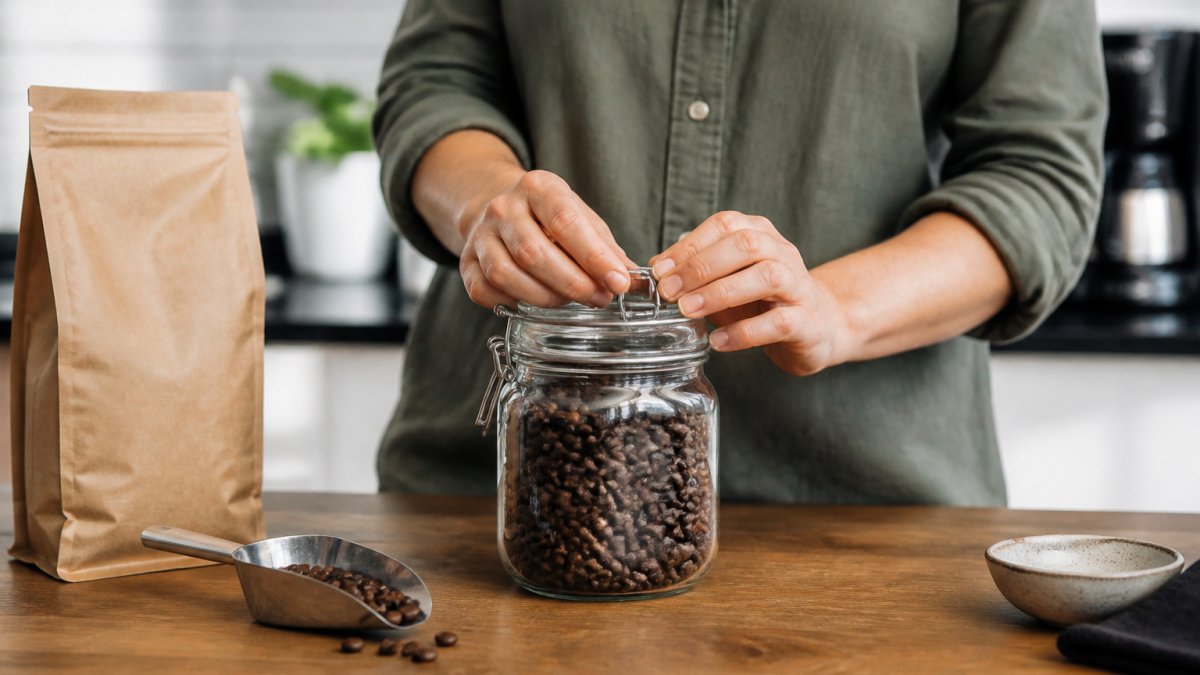
Our recommendation at Hot Chick Coffee: buy what you will drink in two to three weeks, then store it well. Small, frequent orders can help maintain freshness.
The Four Enemies: Air, Light, Heat, and Moisture
Four forces work against your beans, and each one has a fix:
- Air: Causes oxidation. Fix it with an airtight seal and squeeze out excess air.
- Light: Breaks down aromatic oils. Fix it with an opaque container or a dark cupboard.
- Heat: Speeds up staling. Fix it by keeping beans away from the stove and sunny counters.
How to Tell If Coffee Beans Are Stale
Stale coffee beans show clear signs: a dull, flat smell, dry matte beans, and a cup that tastes weak or papery no matter how you brew. Your nose is the fastest test.
Stale is a quality problem, not a safety problem. Dry roasted beans do not support mold or bacterial growth as long as they stay dry. A bag open for six months is very likely safe to brew, just very likely to taste flat.
The Freshness Test
Try this freshness test: put a small handful of beans in a sealed jar, shake for a few seconds, then open and smell. Fresh beans release a strong, sweet aroma; stale beans smell like cardboard, sawdust, or nothing. Shaking releases the volatile aromatic compounds trapped in the bean, so if they are gone, the smell is gone too.
Other signals to watch for:
- No bloom when brewing. Fresh grounds puff up and bubble when hot water hits them, because they are still releasing carbon dioxide. Flat grounds sit there.
- Flat, bitter, or hollow taste. Good acidity disappears first, then sweetness, leaving a papery or woody finish.
- Beans that crumble instead of cracking. Fresh beans snap cleanly when you bite one; stale beans tend to crush or crumble.
Why Appearance Alone Is Not Enough
You cannot reliably judge freshness by looking at a bean. Roast level changes the surface: dark roasts look oily when fresh, light roasts look dry even at their peak. Appearance is a supporting clue, not a verdict; smell and the brewed cup are the real tests.
When to Discard
Stale beans are generally a quality issue, not automatically unsafe, but discard rather than brew in these cases:
- Visible mold. Fuzzy patches, white or green specks, or a musty smell that persists after shaking. Moisture got in, and mold is a real safety concern.
- Beans that were stored damp or in the fridge and show condensation damage. Moisture plus time is the one combination that can turn a quality problem into a safety one.
- A rancid or sour smell that does not read as coffee. Oxidized oils can go rancid; if the smell is sharp and unpleasant rather than merely flat, discard.
If a bag fails the smell test but shows no mold or rancid notes, it is not ruined, just not at peak flavor. Use it for cold brew, where bold flavors cover flatness, or in a recipe where coffee is one note among many.
A practical rule: judge freshness by smell and cup, safety by mold and moisture. Conflating the two is how people throw out good coffee or brew bad coffee.
Best Sellers Sample Pack: 6Bean, Cowboy, Breakfast, Peru, Mexico, Bali →
Freezing Coffee Beans: When It Works and When It Backs Off
Freezing coffee beans works well if you seal them airtight and freeze in portions you will use within a week or two. It backfires when you freeze a whole bag, thaw, refreeze, and repeat: each thaw cycle pulls moisture onto the beans, flattening flavor and eventually inviting mold.
Freezing works because staling is largely oxidation and degassing, and both slow dramatically as temperature drops. A freezer does not stop the clock, but a well-sealed portion can taste close to fresh for one to two months.
The Portion-and-Seal Method
- Portion before freezing. Divide fresh beans into amounts sized for about one week of brewing. A single 12-ounce bag is roughly two to three weekly portions for a typical two-cup-a-day household. Portioning up front means you never thaw more than you will use.
- Seal each portion airtight. Use a vacuum sealer, a small airtight jar filled to the top to minimize headspace, or a heavy-duty freezer bag with the air pressed out. Label each portion with the roast date so you know what you are pulling.
- Freeze immediately. Do not let portions sit on the counter while you finish the rest. The beans should go from room temperature to frozen as quickly as possible.
- Thaw one portion at a time. Move a single portion to the counter and let it come to room temperature before grinding. Do not open the container while the beans are still cold, because moisture from the air will condense on them.
- Never refreeze a thawed portion. Once a portion has thawed, treat it like an opened bag and use it within its normal window. Refreezing is where most freezer advice goes wrong.
Grinding From Frozen
You can grind beans straight from the freezer, and many home brewers prefer it: cold beans grind more uniformly because the oils are firm and the bean fractures cleanly. The trade-off is that very cold beans can be harder on some grinders, and grounds absorb moisture quickly. If you grind frozen, grind right before brewing and do not let the grounds sit.
What Freezing Does Not Fix
Freezing cannot rescue beans that were already stale. If a bag sat open on the counter for a month, sealing and freezing preserves that stale flavor, not restores it. Freeze fresh beans, not old ones, and keep the freezer clean: beans absorb odors, so a portion sealed next to last week's fish will taste like it.
A common pattern: buy a larger bag, portion it into weekly bags on arrival day, and freeze all but one. It takes about ten minutes and is the highest-leverage storage habit after buying an airtight container.
Roast Date, Best-Before Date, and What They Actually Tell You
The roast date tells you when the clock started; the best-before date tells you when the roaster stops standing behind the flavor. They are not the same, and the roast date is the one that matters for freshness.
A few practical rules:
- Look for the roast date first. A bag with only a best-before date hides the most useful number.
- Treat best-before as a floor, not a target. Beans past it are usually safe but past their best.
- Expect a resting period. Beans release gas for a few days after roasting. Many roasters suggest waiting a few days before brewing for the brightest cup.
At Hot Chick Coffee, we roast in small batches and ship directly to your door with free shipping, so the gap between roast and brew stays short.
Whole Beans vs. Ground Coffee: Freshness Differences
Whole beans stay fresh far longer than ground coffee: weeks at peak versus days. Grinding exposes far more surface area to oxygen, which speeds staling dramatically.
The numbers tell the story in plain terms:
- Whole beans: two to four weeks at peak after roasting.
- Ground coffee: about one to two weeks in a sealed bag, and just days once opened.
- Freshly ground coffee: best within minutes to an hour of grinding.
So grind right before you brew. A burr grinder pays for itself in flavor.
Brewing method shifts the window too. Espresso rewards very fresh beans but needs a short rest first, since too-fresh beans release gas that throws off the shot.
If you want to explore roast levels and origins without committing to a full bag, our Best Sellers Sample Pack at $24.99 lets you try six small-batch coffees in 2oz packs. It is an easy way to find your favorite before you stock up.

Frequently Asked Questions
Are 10-year-old coffee beans still good?
No. Coffee beans lose almost all their flavor and aroma within months, not years. After a decade, the oils have gone rancid and the beans are well past stale. They are not dangerous to consume in most cases, but they will taste flat, woody, and possibly bitter. There is no brewing method that revives coffee beans that old. For reference, whole coffee beans stay fresh for about 2 to 4 weeks after opening, and unopened bags peak within 3 to 6 months of the roast date.
How long do coffee beans stay fresh in a sealed bag?
An unopened, sealed bag of whole coffee beans stays at peak flavor for roughly 3 to 6 months past the roast date, depending on the roast level and packaging. Dark roasts fade faster than light roasts. Bags with a one-way valve and airtight seal protect beans from oxygen better than paper or loosely folded packaging. After opening, the clock resets to about 2 to 4 weeks at room temperature. Check the roast date, not just the best-before date, to judge true freshness.
Do coffee beans stay fresh longer in the freezer?
Yes, freezing coffee beans can extend freshness significantly, but only if done right. Freeze beans in small, usable portions in airtight containers or resealable bags with the air pressed out. Use one portion at a time and let it come to room temperature before grinding. Avoid repeatedly thawing and refreezing the same bag, because condensation and moisture damage the beans. Frozen whole beans can stay fresh for up to 6 months without major flavor loss.
How should you store coffee beans after opening the bag?
Transfer beans to an airtight container and keep it in a cool, dark place away from the stove, oven, or sunny windowsill. Do not store beans in the refrigerator, where moisture and food odors creep in. Keep the original bag's valve or use a container with a one-way valve if possible. Grind just before brewing, since ground coffee goes stale in minutes to hours. Buy in quantities you can finish within a few weeks for the best cup.
Knowing how long do coffee beans stay fresh only helps if the beans reach you quickly. That is where Hot Chick Coffee comes in. We roast in small batches, ship free to your door, and print clear roast dates so you always know where your beans stand. Try our small-batch roasts and taste what fresh really means.
0 comments