
Last Updated: October 26, 2026
Quick Summary
To store coffee beans well, keep them away from air, light, heat and moisture by sealing them in an airtight, opaque container at a stable, cool room temperature. Whole beans stay at their peak for about one to two weeks after the roast date, so match your storage method to how fast you drink.
- Roasted whole beans stay fresh for about one to two weeks after the roast date.
- Never store beans in the fridge or near a sink, since moisture ruins them.
- Stainless steel is our pick for most people because it blocks light and seals well.
- Portion beans into single-week portions before freezing and thaw each portion only once.
- Frozen whole beans hold good quality for roughly two to three months.
Table of Contents
- Why Fresh Roasted Coffee Beans Lose Their Edge
- How Long Do Coffee Beans Stay Fresh?
- The Best Way to Store Coffee Beans: Four Rules That Decide Everything
- Picking a Coffee Bean Storage Container
- Can You Freeze Coffee Beans? Yes, With One Catch
- How to Tell Whether Your Beans Have Lost Freshness
- Match Your Storage Method to How Fast You Drink Coffee
- Ordering Beans That Arrive Ready to Store Right
- Frequently Asked Questions
Why Fresh Roasted Coffee Beans Lose Their Edge
Fresh roasted coffee beans start losing what makes them special the moment they leave the roaster. Oxygen, light, heat, and moisture attack the oils and aromatics that create a bold, memorable cup.
At Hot Chick Coffee, we roast in small batches because freshness is the whole point.
Here's what most guides get wrong: they treat storage as an afterthought. It isn't. It's half the flavor equation.
How Long Do Coffee Beans Stay Fresh?
Roasted coffee beans stay fresh for about one to two weeks after the roast date, then slowly decline for another month or so. Whole beans hold their peak flavor far longer than pre-ground coffee, which stales within days of grinding.
The clock starts at roast, not at purchase. A bag sitting on a shelf for months has already spent most of its freshness window. That's why we stamp the roast date clearly and ship fast.
A few practical benchmarks:
- Peak window: one to two weeks after roasting
- Good window: three to four weeks, stored well
- Decline zone: beyond a month, still drinkable but duller
For a deeper dive into exact timelines, read our guide on how long coffee beans stay fresh.
The Best Way to Store Coffee Beans: Four Rules That Decide Everything
The best way to store coffee beans comes down to four enemies: air, light, heat, and moisture. Control all four and your beans stay vibrant. Ignore them and even great beans go flat fast.
We think of it as a checklist you run every time you seal a bag:
- Remove air with an airtight seal, ideally with a one-way valve.
- Block light by keeping beans in an opaque container or a closed cupboard.
- Avoid heat and store at a stable, cool room temperature.
- Keep moisture out by never storing beans in the fridge or near a sink.
Get these four right and you've solved 90% of the storage problem. The rest is just picking the right container.
Keep Air and Oxygen Away
Oxygen is the biggest threat to coffee freshness. It reacts with the oils on the bean surface and turns bright, fruity notes into cardboard. Every time you open a bag, fresh air rushes in.
A common mistake is leaving the bag rolled loosely on the counter. That's an open invitation for oxygen to do its work. Instead, squeeze excess air out before sealing, and use a container that limits how much air sits against the beans.
Block Light, Heat, and Moisture
Light breaks down the compounds that create aroma. Heat speeds up the staling reaction. Moisture, even a little condensation, can turn a great bag musty.
Watch out: the top of your fridge and the shelf above the oven are the two worst spots in most kitchens. Both swing in temperature all day. Find a cool, dark cupboard instead, away from the dishwasher and the stove.
Picking a Coffee Bean Storage Container
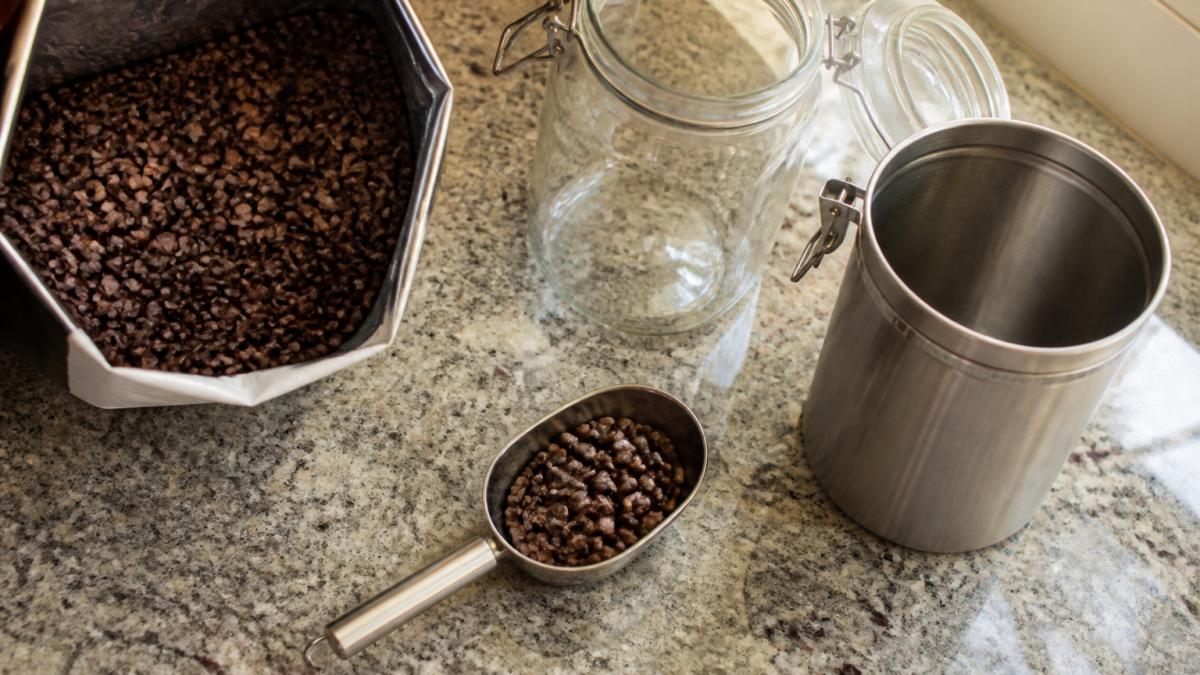
A good coffee bean storage container does three things: seals tight, blocks light, and holds a stable temperature. Everything else is preference. But the details inside those three jobs are where most buyers get tripped up, so it's worth walking through what each option actually does to the beans.
Original Bags and One-Way Valves
The bag your beans arrive in is often better than people think. Quality bags are built with a one-way valve that lets carbon dioxide escape while keeping oxygen out. That valve matters most in the first days after roasting, when beans release gas, a process called degassing.
A few practical notes on working with the original bag:
- Press, don't roll. Squeeze the bag from the bottom to push excess air out the top before sealing. Rolling traps air in the folds.
- Clip, don't knot. A bag clip or a fold-and-binder-clip seal keeps the valve functional. Knotting the top can block the valve.
- Keep the valve clear. Don't stack heavy items on the bag; a crushed valve stops venting.
If you finish a bag within a week or two, keep the beans in the original bag, press out the air, and clip it shut. It's simple and effective.
Containers Compared: Glass, Stainless Steel, Ceramic, and Plastic
Here's how the main options stack up:
| Container | Blocks Light | Air Seal | Best For |
|---|---|---|---|
| Original bag with valve | Partial | Good | Fast drinkers, first two weeks |
| Glass with clamp lid | No, unless opaque | Very good | Short-term, display kitchens |
| Stainless steel | Yes | Very good | All-around protection |
| Ceramic | Yes | Good | Cool, dark pantries |
| Plastic | Varies | Fair | Budget, short-term use |
Stainless steel is our pick for most people. It blocks light completely, seals well, and holds up over years of daily use. Glass looks great but lets light in, so store it in a cupboard. Plastic is fine in a pinch but tends to hold odors and lose its seal over time.
Two container details matter more than the material:
- Match container size to bean volume. A large canister half-full of beans holds a lot of air against the beans. Choose a container that fills to within an inch or two of the lid, or use a smaller container as the bag empties.
- Skip the built-in grinder and the scoop compartment. Every extra opening is another path for air and light. A simple lid with a gasket beats a gadget-heavy design.
A Quick Way to Match Container to Pace
Rather than buying one container for every situation, most households do well with two: the original valve bag for the bag currently in rotation, and one opaque airtight container for the backup bag. If you routinely buy more than two weeks' worth at a time, add a freezer-safe setup (covered below) instead of a third countertop container. The container you choose should follow your drinking pace, not the other way around.
Can You Freeze Coffee Beans? Yes, With One Catch
You can freeze coffee beans, and it's one of the best ways to stretch freshness for months. The catch is moisture. Freeze beans in a truly airtight container, and thaw them only once.
The freezer works because cold slows the staling reaction. But every time you open a frozen bag and let it warm up, condensation forms on the beans.
Portion First, Thaw Once
Portion your beans before freezing so you only thaw what you'll use in a week. This is the single biggest difference between freezing that works and freezing that ruins beans.
Here's a simple routine:
- Divide beans into single-week portions, roughly enough for the number of cups you brew in seven days.
- Seal each portion in an airtight, freezer-safe bag or jar. Press out as much air as possible before sealing.
- Label with the roast date and the portion size, so you grab the oldest first.
- Freeze immediately. Don't leave portions on the counter to "settle" first.
- Thaw one portion at room temperature, unopened, before brewing.
Keep the container sealed while it thaws. That prevents condensation from forming on the beans. Once thawed, treat that portion like a normal bag and use it within a week.
Why Refreezing Fails
Refreezing is the mistake that quietly ruins a good bag. Each thaw cycle pulls moisture onto the bean surface, and each refreeze locks that moisture in. Over two or three cycles, the oils oxidize faster and the cup turns flat and papery. The fix is portioning, not willpower: if every portion is sized to a week, there's no reason to thaw more than you need.
A few related habits that protect frozen beans:
- Freeze whole beans, not grounds. Ground coffee has far more surface area exposed to moisture and oxygen, and it stales within days even in the freezer.
- Use freezer-safe, thick-walled bags or rigid jars. Thin bags can pick up freezer odors and let moisture through the seams.
- Keep frozen beans away from the door. The door is the warmest, most temperature-fluctuating part of the freezer.
How Long Frozen Beans Hold
Frozen whole beans hold good quality for roughly two to three months, and remain drinkable beyond that. The decline is slower than at room temperature but not zero, so label portions with the roast date and rotate oldest-first. If you buy in bulk, freezing in week-sized portions is the most reliable way to keep a multi-month supply tasting close to its roast-day best.
How to Tell Whether Your Beans Have Lost Freshness
Stale beans tell you plainly if you know what to look for. The clues show up in aroma, appearance, and the brew itself.
Check for these signs:
- No smell: fresh beans release a strong, sweet aroma when you open the bag.
- Oily, dull surface: some oil is normal, but a slick, greasy sheen on dark beans can signal age.
- Flat flavor: a cup that tastes hollow or papery has lost its edge.
If your beans fail these checks, they're still safe to drink, just not at their best. If you suspect your beans are past their prime, our beginner's guide on how to brew fresh coffee at home can help you get the most from what's left.
Match Your Storage Method to How Fast You Drink Coffee
The right storage method depends on your pace. A daily espresso drinker and a weekend-only brewer need different setups.
Here's how we'd match method to habit:
- Fast drinkers, one bag a week: keep beans in the original bag with the valve, sealed tight.
- Moderate drinkers, one bag every two to three weeks: transfer to a stainless steel or opaque airtight container.
- Experimenters who like variety: a subscription keeps a steady flow of fresh beans so nothing sits long. Our best coffee subscription for variety guide covers how to keep a rotating supply without waste.
The theme is simple: the slower you drink, the more protection you need.
Ordering Beans That Arrive Ready to Store Right
The best storage in the world can't rescue beans that sat in a warehouse for months. Freshness starts with where you buy.
We roast in small batches and ship directly to your door, so your beans arrive near their peak and ready to store. Free shipping and no sales tax on coffee in most states keep the routine affordable. And with a wide variety of roasts and blends, you can keep experimenting without letting anything go stale.
Frequently Asked Questions
How long do freshly roasted coffee beans stay good?
Whole beans hit their best flavor roughly 3 to 14 days after the roast date and stay enjoyable for about four to six weeks when stored in an airtight container away from light and heat. After that window, the beans are safe to brew but the aroma and cup quality fade. If you buy more than you can drink in a month, split the bag and freeze the extra in small portions so the coffee you store at room temperature is always within its freshness window.
Is it okay to store coffee beans in a Ziploc bag?
A zip-top bag is better than an open bag but still a weak choice for long-term storage. Thin plastic lets oxygen and light through, and pressing the air out by hand leaves plenty behind. Use it for a day or two at most. For anything longer, move the beans to an opaque airtight coffee bean storage container, or keep them in the original bag with the one-way valve folded and clipped shut, then place that bag inside a dark cupboard away from the oven and dishwasher.
Is it better to store coffee beans in glass or stainless steel?
Stainless steel wins on light protection because it blocks sunlight completely, while clear glass lets light in unless you keep it in a dark cupboard. Glass is easy to clean and does not hold odors, so it works well if you store it inside a pantry. Whichever you choose, pick a container with a tight seal and a one-way valve if possible. Avoid clear canisters on open counters near a window, and never store beans in the fridge, where moisture and food odors do more damage than light.
Should you let fresh roasted coffee beans rest before brewing?
Yes, briefly. Beans roasted within the last day or two release carbon dioxide, which can make espresso pour unevenly and give the cup a sharp, gassy edge. Give whole beans 3 to 7 days of rest in an airtight container before brewing, and up to 10 days for espresso. After that, flavor peaks and you should grind only what you need right before brewing. Resting is not the same as staling, so keep the beans sealed and away from heat and light while they settle.
Storing fresh roasted coffee beans well is a small habit with a big payoff. If you want beans that arrive fresh and stay that way, Hot Chick Coffee has you covered with small-batch roasting, free shipping, and a rotating selection of roasts and blends. Get started with Hot Chick Coffee and taste what fresh-roasted really means.

0 comments